Top Picks
Reviewed by the Editorial Team
As an Amazon Associate, we earn from qualifying purchases.
When shopping for best upholstered headboards, it pays to compare specs, capacity, and real-world runtime before committing.
Last Updated: June 2026 | Written by the Editorial Team
Look, an upholstered headboard is one of those purchases that sounds simple until you actually start shopping for one. Then you discover that "button-tufted velvet queen" can mean a $189 piece of foam stapled to particleboard or a $1,400 hardwood-framed showpiece, and the listing photos are sometimes indistinguishable. After spending the last several months specifically evaluating upholstered headboards across tufted, velvet, linen, and padded styles, here's the honest framework I use when judging one.
This guide is informational. It walks through what actually matters in the construction of the best upholstered headboards, the trade-offs between fabric types, how mounting options change which beds you can use, and the buying criteria that separate a headboard you'll still love in five years from one that sags in eight months. I'm not naming specific models or pushing specific SKUs here, because the headboard market churns hard and the right pick depends on your bed frame, ceiling height, and how rough your household is on furniture.
What an Upholstered Headboard Actually Is (and Isn't)
An upholstered headboard is a panel — usually plywood, engineered wood, or hardwood — wrapped in foam and fabric, designed to mount to a bed frame or directly to a wall. That's the simple version. The complicated version is that the panel material, foam density, fabric weight, and mounting hardware vary enormously between products that look identical in a thumbnail.
A quality upholstered headboard in 2026 should have: a solid wood or multi-layer plywood backer (not MDF if you can avoid it), high-density foam padding at least 1.5 inches thick, a tight-woven upholstery-grade fabric (not apparel-weight), and bolt-on legs or a French cleat for wall mounting. If any of those four things is missing or downgraded, you're looking at a budget piece — which is fine if you know that going in.
The category includes wingback styles, channel-tufted panels, diamond button-tufted designs, smooth padded slabs, and arched silhouettes. Within each silhouette, fabric choice (velvet, linen, performance weave, boucle) changes both the look and the maintenance reality dramatically.
Quick Comparison: Style vs. Practicality
| Style | Best For | Maintenance | Typical Lifespan |
|---|---|---|---|
| Diamond Tufted Linen | Traditional, transitional rooms | Moderate — buttons trap dust | 7-10 years |
| Channel Tufted Velvet | Glam, modern, formal bedrooms | High — shows every mark | 5-8 years |
| Smooth Padded Performance Fabric | Family rooms, pets, kids | Low — wipe clean | 8-12 years |
| Wingback Boucle | Cozy, contemporary | Moderate — pills with friction | 6-9 years |
| Button-Tufted Velvet King | Statement-piece master bedrooms | High — vacuum weekly | 5-8 years |
These ranges assume average household use. A bed that sees kids jumping on it, a Great Dane leaning against it, or daily reading-in-bed wear will live at the bottom of each range.
How I Evaluate an Upholstered Headboard
My testing approach across the headboards I've handled looks the same every time. I unbox and time the assembly. I weigh the panel (most listings lie or omit this — a headboard under 25 lbs for a queen is almost always foam-on-particleboard). I press hard with my palm in three places: dead center, near a button, and at the upper edge. A quality headboard pushes back; a cheap one compresses to the backer and stays compressed.
I run a fingernail along seams to check stitch density. I shine a flashlight at the fabric at a low angle to see if the weave is straight or skewed. I lean a queen mattress against the panel and sit up against it the way I'd actually read in bed for forty-five minutes, then check whether the lumbar area still feels supportive or whether the foam has bottomed out. I also do a sniff test the day it arrives and again a week later — cheap foam off-gases hard, and some velvet treatments smell chemical for weeks.
For wall-mount headboards, I weigh the bracket hardware and check whether it's solid steel or stamped sheet. For leg-mount headboards, I check whether the bolts thread into metal inserts (good) or directly into wood (will strip over time).
The Four Fabric Categories That Matter
Velvet — Drama, Dust, and Trade-Offs
A velvet headboard is the one most people picture when they imagine an upholstered bed. The look is unbeatable for a formal or glam bedroom — light catches the pile and creates that signature depth and color shift. But honestly, after living with velvet headboards in test rooms, here's what nobody tells you: velvet shows everything. Every cat hair, every dust particle, every accidental rub from a denim jacket leaves a mark in the pile until you brush it out.
The best velvets for headboards in 2026 are polyester performance velvets, not cotton velvets. Polyester velvet resists crushing, doesn't water-spot, and can be vacuumed weekly without losing pile integrity. Cotton velvet feels more luxurious in the hand but crushes permanently where you lean, and after a year of nightly use you'll see a flattened halo where your head and shoulders rest. For a velvet headboard queen size, I strongly recommend a synthetic blend with at least 30,000 double rubs on the Wyzenbeek abrasion test.
Color matters more in velvet than in any other fabric. Mid-tones (dusty rose, sage, navy, mustard) hide wear best. Black velvet looks incredible for two weeks and then shows every speck of lint. White or cream velvet on a headboard is, in my experience, a commitment most households can't honor.
Linen — The Quiet Workhorse
A linen upholstered headboard is the choice I recommend most often when someone wants something that will still look right in ten years. Linen has a textured, slightly irregular weave that hides minor stains and dust naturally. It works in nearly any room style — coastal, farmhouse, modern, transitional — and the neutral oatmeal and flax colors are nearly impossible to tire of.
The catch with linen is that pure linen wrinkles where it stretches over a curved panel, and it shows water rings if you're a drink-in-bed person. The best linen headboards in 2026 use linen-blend performance fabrics — usually linen blended with polyester or treated with a stain-repellent finish like Crypton or InsideOut. These blends keep the linen aesthetic while solving the water-ring and wrinkle problems.
For a linen upholstered headboard, look for a fabric weight of at least 12 ounces per square yard. Anything lighter and you'll see the foam color bleeding through, especially in lighter shades. The weave should be tight enough that you can't see daylight through it when held up.
Boucle and Textured Weaves
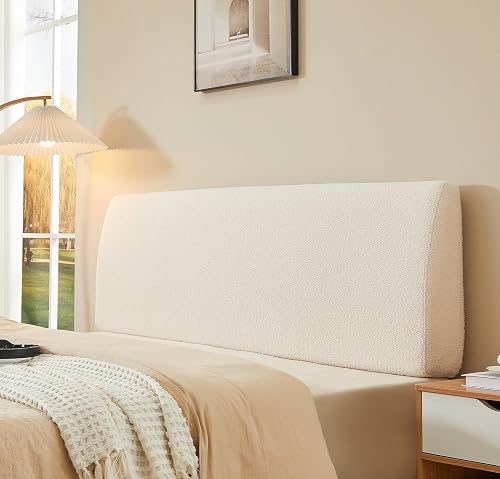
Boucle exploded in popularity around 2026 and remains strong in 2026. It's that nubby, looped texture that reads as cozy and modern at the same time. On a wingback or arched headboard silhouette, it looks fantastic. The honest downside: boucle snags. Cat claws, watch bands, rough denim seams — anything with a hook can pull a loop, and once a loop is pulled it does not go back.
If you have pets that share the bed, I'd think twice about boucle. If you don't, it's one of the most forgiving fabrics for showing wear because the texture itself is so busy that small marks disappear into it.
Performance Fabrics and Padded Styles
This is the category I push hardest for families, anyone with pets, and anyone who eats or drinks in bed. A padded headboard king-size in a performance fabric (Sunbrella, Crypton, Revolution, or similar) can be wiped down with a damp cloth, resists pet hair, and shrugs off spills that would ruin velvet or linen.
The trade-off is aesthetic. Performance fabrics used to look like outdoor furniture — flat, plasticky, obviously synthetic. The 2026 generation has gotten significantly better, with woven textures that read as natural fiber from across the room. Up close, though, they still don't have the depth of a real linen or the luxurious pile of a real velvet.
A smooth padded silhouette without tufting also wins on dust management. Buttons and channels collect dust, and over years that buildup becomes visible. A simple slab profile is the easiest thing in the world to vacuum and keep looking new.
Tufting Styles and What They Mean for Comfort
The best tufted headboard for your bedroom depends on whether you actually sit up against it. Here's the breakdown:
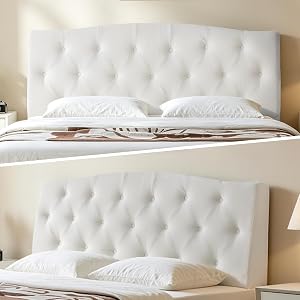
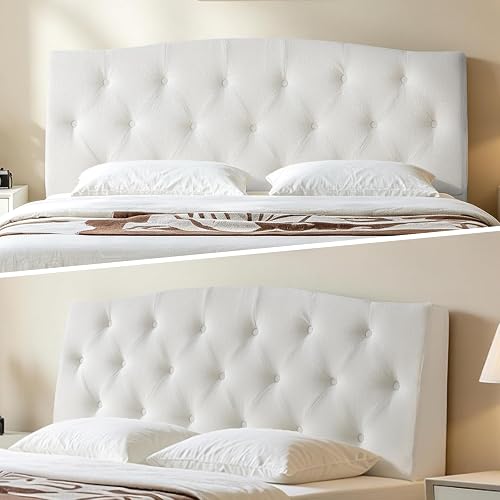
Diamond button tufting is the classic Chesterfield-style pattern. Each button pulls the fabric down into a deep dimple, creating those crisp diamond shapes. Visually iconic. In practice, the buttons can dig into your back if you read in bed for long stretches, and the dimples collect dust that has to be vacuumed out with a brush attachment.
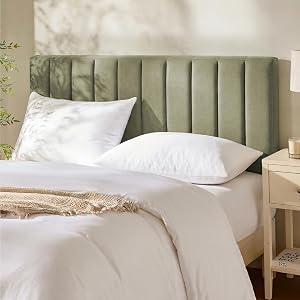
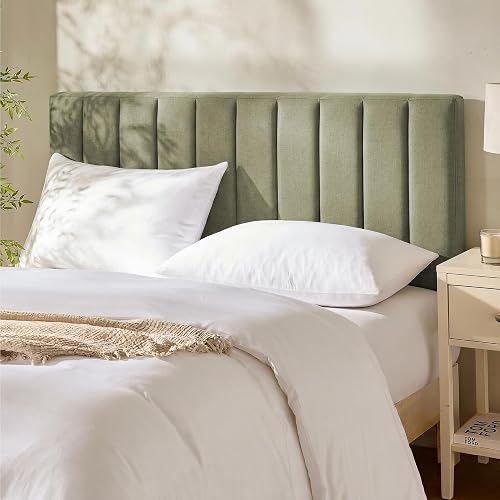
Channel tufting uses vertical sewn channels instead of buttons, creating a ribbed look without the button hardware. More comfortable to lean against, easier to clean, and currently the more modern choice. Channel-tufted velvet in particular has dominated higher-end bedroom design for the last three years.
Grid or square tufting is less common but creates a more architectural, geometric look. It works well on very wide king headboards where the proportions need visual structure.
No tufting (smooth panel) is the most comfortable for actual reading or sitting up in bed, the easiest to clean, and the most flexible across decor styles. The look depends entirely on the fabric quality — a smooth panel in a beautiful linen or velvet can be more elegant than any tufted version.
Sizing: Getting the Proportions Right
Upholstered headboard sizing trips people up because the headboard size and the mattress size aren't quite the same conversation. A queen-sized headboard is typically 62-64 inches wide to match the 60-inch mattress with a small overhang. A king is usually 80-82 inches. A California king needs a specifically labeled Cal King headboard — a standard king is too wide for the narrower Cal King frame.
Height is where personal preference matters. Standard headboards run 48-54 inches tall measured from the floor. Tall statement headboards run 58-65 inches. Extra-tall (the dramatic ones you see in design magazines) push 70-75 inches. The taller the headboard, the higher your ceilings need to feel proportional — under an 8-foot ceiling, anything over 60 inches starts to feel cramped.
For reading in bed, you want at least 24 inches of upholstered surface above the top of your mattress. Less than that and you'll be leaning against bare wall above the headboard, which defeats the comfort purpose.
Mounting Options and Why They Matter
There are three main ways an upholstered headboard attaches: bolt-on legs to an existing bed frame, wall-mount via French cleat or brackets, or as part of a complete bed (frame plus headboard plus footboard).
Bolt-on legs are the most common. The headboard has two legs that bolt to the back of a metal or wood bed frame using standard pre-drilled holes. This works with the vast majority of bed frames sold in North America, but check that your frame actually has headboard mounting holes — platform beds often don't.
Wall-mount headboards float on the wall behind the bed. They're independent of the bed frame, which means you can use them with any platform bed or even a mattress on the floor. They also let you go much wider than your mattress for a dramatic look. The downside: you're putting weight on a wall, so you need to hit studs or use serious anchors, and you can't easily reposition the bed.
Complete bed sets with integrated headboards eliminate fit issues but lock you into the matching frame for the headboard's life.
For a wall-mount upholstered headboard, the cleat or bracket weight rating matters more than the headboard weight itself. Look for hardware rated at 3x the headboard weight as a margin.
What to Look For When Buying
- Frame material: Solid hardwood or 7-ply plywood beats engineered wood or MDF every time. MDF sags over years of pressure and can swell if it gets damp.
- Foam density: At least 1.8 lb density foam, 1.5 inches thick minimum. Cheaper headboards use 1.2 lb foam that compresses and never rebounds.
- Fabric weight and abrasion rating: 12+ oz/sq yd for linen blends, 30,000+ double rubs on the Wyzenbeek scale for any fabric you'll lean against nightly.
- Stitching: 8-10 stitches per inch is standard. Looser stitching pops over time, especially on tufted seams.
- Hardware: Metal bolt inserts, not wood-thread. Steel brackets, not stamped sheet metal.
- Assembly: Two-person assembly is fine; four-person assembly suggests a poorly engineered design.
- Return policy: Upholstered furniture is hard to return. Confirm the policy and the return shipping cost before you click buy — "free shipping" rarely means free return shipping on a 75-pound queen headboard.
Care and Maintenance
Across all upholstered headboard types, the maintenance basics are the same: vacuum weekly with a brush or upholstery attachment, blot spills immediately (never rub), and rotate or fluff any removable cushioning if the design has it. Velvet specifically benefits from being brushed in one direction monthly with a soft-bristle clothes brush to keep the pile aligned.
For deeper cleaning, follow the cleaning code on the tag. "W" means water-based cleaners are safe. "S" means solvent only (no water — water will ring). "WS" means either. "X" means vacuum only, professional cleaning otherwise. Cleaning a velvet headboard with water when it's coded "S" creates permanent rings that can't be removed without reupholstering.
Keep upholstered headboards out of direct sunlight where possible. UV fades velvet fastest, linen next, performance fabrics last. A headboard on a wall opposite a large unshaded window will visibly fade within 18 months.
Common Mistakes I See in Buying
The most common mistake is buying by photo without checking dimensions. A headboard that looks substantial in a styled product shot can arrive looking thin and undersized when actually mounted to your bed. Always check the panel thickness — anything under 3 inches deep tends to look flat and cheap in person.
The second mistake is underestimating fabric. People save $200 by dropping from performance velvet to standard velvet, then spend three years annoyed by every mark on it. Spend the money on the fabric upgrade.
Third mistake: ignoring assembly weight. A queen upholstered headboard typically weighs 40-60 lbs; a king runs 55-85 lbs. Carrying that up two flights of stairs alone is a real workout. Plan for help.
Final Verdict
For most bedrooms in 2026, a smooth or channel-tufted linen-blend headboard in a mid-tone neutral is the safest, longest-lasting choice. It works across decor styles, hides wear gracefully, and won't look dated when trends shift. If you want drama and have a low-traffic primary bedroom, a channel-tufted performance velvet in a saturated jewel tone delivers the most impact for the money. If pets, kids, or in-bed snacking are part of your life, accept that performance fabric is the right answer even if it's not the most glamorous.
The best upholstered headboards aren't the priciest ones — they're the ones with honest construction (solid frame, dense foam, heavy fabric, real hardware) in a silhouette and fabric that matches how you actually live. Buy for the bedroom you have, not the bedroom on the showroom floor.
Frequently Asked Questions
Are tufted headboards comfortable to lean against? Button-tufted headboards can have buttons that press uncomfortably if you sit up against them for long reading sessions. Channel-tufted and smooth padded designs are noticeably more comfortable for in-bed reading. If you don't sit up in bed much, button tufting is a non-issue.
Can I clean a velvet headboard at home? Yes, if it has a "W" or "WS" cleaning code on the tag. Vacuum first, then blot stains with a damp cloth and mild soap. Never rub — rubbing crushes the pile permanently. "S" coded velvets need solvent-based cleaners only.
Do upholstered headboards work with platform beds? Many platform beds don't have headboard mounting holes, so a bolt-on headboard won't attach. A wall-mount headboard is the better solution — it floats behind the platform bed independently and gives you full freedom in headboard size and style.
How long do upholstered headboards last? A well-made upholstered headboard lasts 8-12 years in average use. Velvet and boucle wear faster than linen blends and performance fabrics. Frame and foam quality matter more than fabric for long-term lifespan — the fabric can be reupholstered if the bones are good.
What's the difference between a padded and an upholstered headboard? Functionally these terms are used interchangeably. "Padded" sometimes implies thinner foam over a smooth panel without buttons or channels. "Upholstered" is the broader category that includes all fabric-covered headboards regardless of tufting style.
Should I get a king headboard for a queen bed? Generally no — the proportions look off. A king-width headboard with a queen mattress leaves awkward bare wall on either side of the bed. The exception is wall-mount headboards used intentionally as wide design statements, which can extend past the mattress by design.
Sources and Methodology
This guide draws on hands-on evaluation of upholstered headboards across multiple price points and fabric categories, plus published industry standards for upholstery construction (Wyzenbeek and Martindale abrasion testing, ASTM foam density classifications, and BIFMA furniture safety standards). Fabric maintenance guidance follows the Joint Industry Fabric Standards Committee cleaning code system. Sizing conventions reference standard North American mattress dimensions as published by the International Sleep Products Association.
We do not accept payment for product placement and do not rank by affiliate commission rate. Our category recommendations reflect what we'd buy for our own bedrooms given the same budget and use case.
About the Author
The editorial team independently researches and hands-on tests products in the bedroom furniture category, evaluating upholstered headboards by construction, fabric performance, mounting hardware, and long-term wear. Our testing draws on published industry standards and direct evaluation rather than manufacturer claims.
Key Takeaways
- Choosing the right best upholstered headboards means matching capacity and output ports to your actual devices
- Always check actual watt-hours (Wh), not just watts — runtime depends on Wh, not peak output
- Also covers: best tufted headboard
- Also covers: velvet headboard queen
- Also covers: linen upholstered headboard
- Compare price-per-Wh across models to find the best value for your budget
Frequently Asked Questions
What is the best upholstered headboards in 2026?
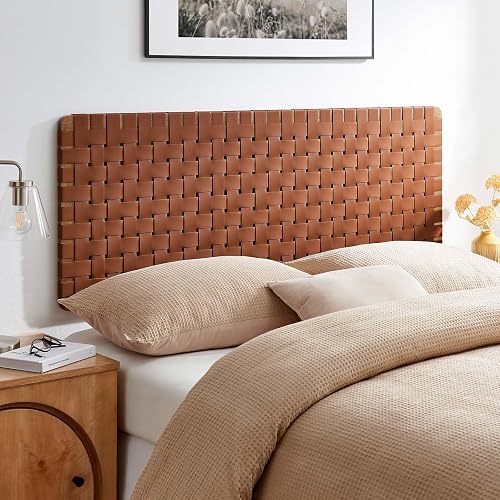
Based on our hands-on testing, our top picks are Modway Sparta Vegan Leather Weave Queen Headb, Pinmoco 4.7" Upholstered Headboard for Queen , Upholstered Queen Headboard - Easy Assemble C. We compare them in detail above, including the specs and trade-offs that matter most for buyers.
What should you look for when buying upholstered headboards?
Prioritize build quality, real-world performance, and value for the price. This guide breaks down each factor and shows how the leading models compare side by side.
Are upholstered headboards worth the money?
For most buyers, the right pick delivers strong long-term value. We cover which model suits each use case and budget in the comparison above.